POPULAR CONFIGURATION
No-Climb With Metal Chew Barrier
Combine inward-facing no-climb extenders, a metal base and ground overlap. Critterfence identifies this as its most popular cat fence configuration.
Shop no-climb kits with chew barrier ›Build a safer outdoor space with a physical cat fence designed to help keep cats inside a designated area. Critterfence offers DIY cat fence kits with no-climb post extenders, ground overlap and optional metal chew barriers. Compare systems for climbing cats, cat rescues, existing fences and fully enclosed spaces. Choose a kit based on your cat’s climbing behavior, the animals you need to exclude and your installation site. Start with a complete kit or adapt a suitable existing fence, then plan gate access, ground protection and nearby climbing or jumping points before choosing your configuration.

Start with these configurations, then compare the options below. Each link opens a kit category with current sizes, components and pricing.
POPULAR CONFIGURATION
Combine inward-facing no-climb extenders, a metal base and ground overlap. Critterfence identifies this as its most popular cat fence configuration.
Shop no-climb kits with chew barrier ›INSIDE & OUTSIDE
Explore kits with extenders on both sides when planning for cats inside and climbing animals outside. Consider rescues, shared boundaries and local wildlife.
Shop two-way no-climb kits ›OVERHEAD COVERAGE
Compare four-sided enclosures with a top when overhead coverage is part of your plan. Review the selected kit’s dimensions, access options and support needs.
Shop fully enclosed cat kits ›| System | Best-fit need | Check before ordering |
|---|---|---|
| No-climb + metal chew barrier | Climbing cats and sites with outside-animal pressure | Inward extenders, metal base, ground overlap; inspect gates and boundaries. No-climb kits with barrier |
| No-climb in both directions | Rescues or sites deterring climbers on both sides | Extender direction, separation needs and the appropriate base treatment. Two-way no-climb options |
| Existing fence retrofit | Customers with a sound existing fence | Structural condition, post strength, attachment compatibility and base gaps. Existing fence add-ons |
| Fully enclosed with a top | Sites requiring overhead enclosure | Span, top support, gate access and the selected kit’s specifications. Enclosed cat fence kits |
| Basic barrier / removable | Non-climbing cats or selected temporary applications | No overhead climb protection; removable use depends on components and ground treatment. Basic barrier kits |
A metal base for selected non-climbing-cat applications; assess climbing separately.
Shop basic kits with chew barrier ›Single-layer kits with ground overlap, without a separate metal chew barrier.
Shop basic kits with overlap ›No separate chew barrier or ground overlap. Review gaps and removability requirements.
Shop basic kits without overlap ›Inward-facing extenders with a metal base and ground overlap.
Shop no-climb kits with barrier ›Climb-deterrent extenders and overlap, without a separate metal chew barrier.
Shop no-climb kits with overlap ›No metal base or ground overlap. Assess how the bottom will be secured at your site.
Shop no-climb kits without overlap ›Climb protection on both sides, with metal base protection and ground overlap.
Shop two-way kits with barrier ›Extenders on both sides and ground overlap, without a separate metal chew barrier; confirm selected-kit components.
Shop two-way kits with overlap ›Extenders on both sides, without a metal base or ground overlap.
Shop two-way kits without overlap ›Four-sided kits with overhead coverage; check dimensions and gate options.
Shop enclosed kits ›Add height or compatible no-climb features to a suitable existing fence.
Shop existing fence add-ons ›Begin with your cat’s climbing behavior and the animals around your property. Climbing cats call for suitable no-climb features or an enclosed design; a basic barrier does not provide overhead climb protection. No-climb extenders may face inward, or both inward and outward when your project needs climbing deterrence on both sides.
Walk the full fence line before ordering. Trees, sheds, outdoor furniture and nearby structures can create jumping or climbing routes. Check where the fence meets buildings and where a gate closes. Choose mesh, base protection and ground overlap for those conditions rather than treating any single feature as a guarantee of containment.
Already have a fence? Compare cat fence retrofit options after checking the structure and attachment requirements.
Critterfence describes 7.5 feet as a common no-climb configuration, not a universal height recommendation. Your cat’s behavior, terrain, gate clearance and nearby objects all affect the design. Review the height and extender arrangement of the actual kit before ordering.
Ground overlap can help address pushing or digging at the base when installed and secured correctly. A metal chew barrier can help resist chewing or intrusion by animals outside the enclosure. Kits without these features need a site-specific plan for the bottom edge and gaps. Confirm the mesh openings and included materials for your selected kit.
Measure the fence line, mark corners and gates, and identify grade changes. Follow the selected kit’s instructions for post spacing, sleeves, bracing, tensioning and attachment. Install extenders in the intended direction, secure the base and any overlap, and check gate edges and connections to buildings.
Poly and metal fencing serve different project needs. Consider mesh size, strength, climb protection and base resistance as a complete system. For existing-fence add-ons, check structural strength and compatibility before attaching extensions. Seasonal removal depends on the kit, ground treatment and tensioning configuration.
Read fence installation instructions and watch the videos. After installation, inspect the perimeter routinely and supervise your cats as they explore the space.
Look closely at mesh attachment, access and enclosure details. Browse more fence installation photos for project ideas.

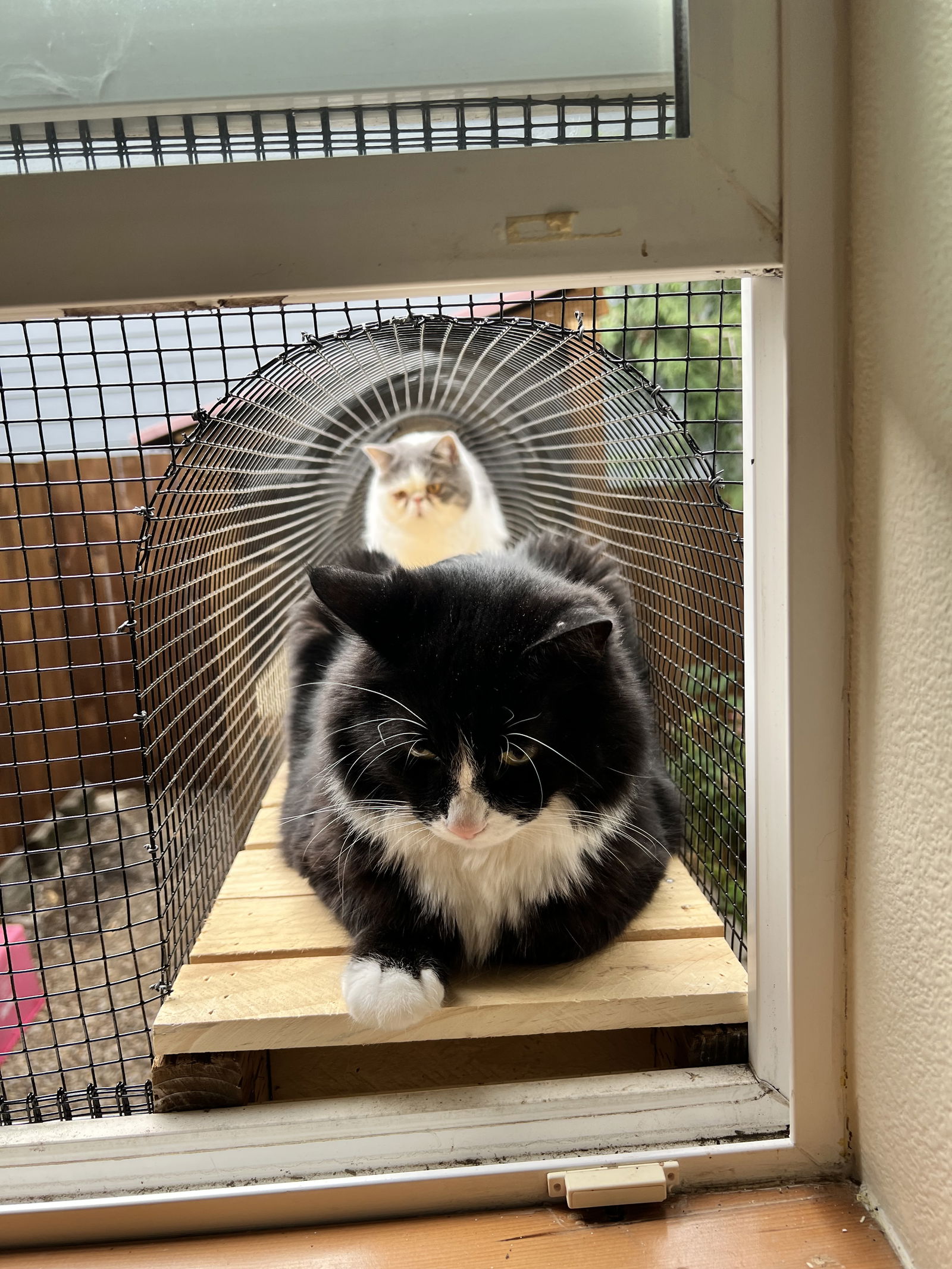
A physical fence with appropriately installed inward-facing no-climb extenders can deter climbing. Assess nearby launch points and inspect the full perimeter.
Critterfence describes 7.5 feet as a common no-climb configuration, but the correct height depends on the site, cat behavior and nearby structures. Review the selected kit and ask for project advice.
Yes. Retrofit kits may add height or no-climb features to suitable existing fences. Check the structure and compatibility before ordering.
A metal base can help resist chewing or intrusion by animals outside the enclosure; select it based on local wildlife and site conditions.
No fence should be described as universally escape-proof. Proper installation, supervision and routine inspections are important.
Consider an enclosure with a top when your site calls for overhead coverage. Compare the available dimensions, support requirements and entry options, and check the full perimeter and base.
Some compatible post and ground-sleeve systems allow seasonal removal. Confirm the selected kit’s ground overlap, tensioning and other components before planning a temporary installation.
Tell our product experts about your cats, existing fence, perimeter dimensions, nearby structures and gate requirements. We can help you compare configurations and prepare a materials quote.