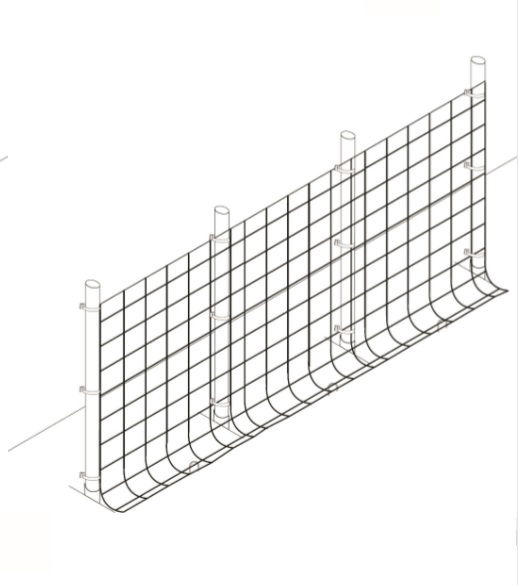
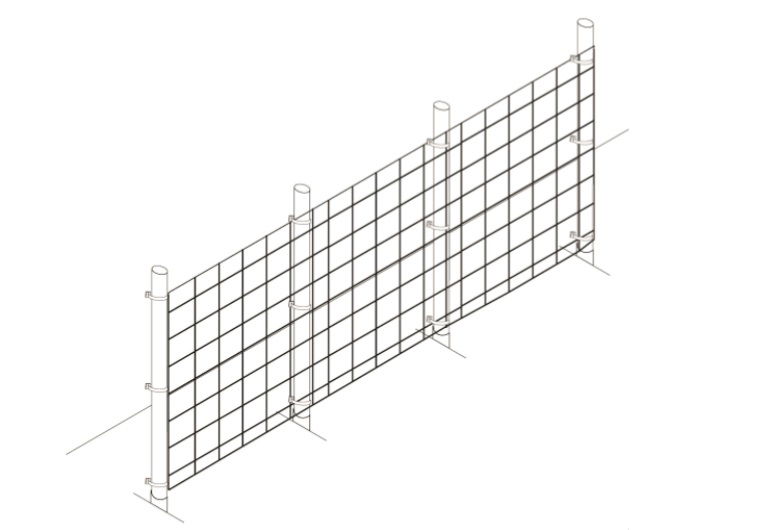
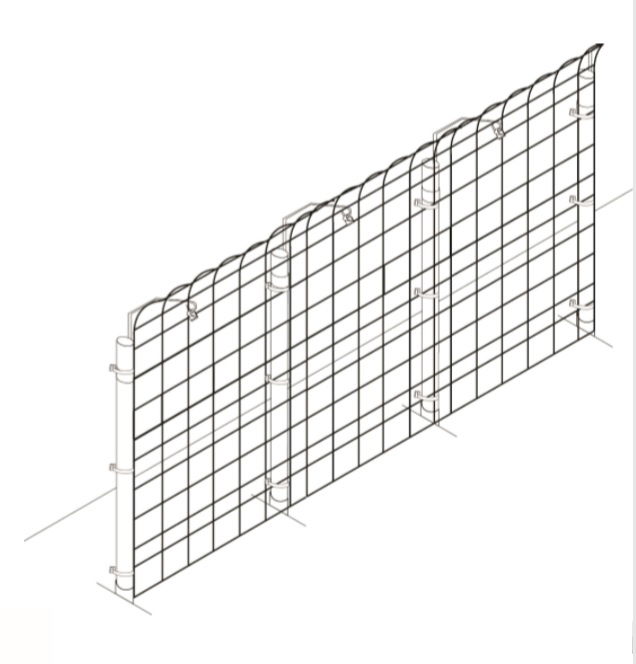
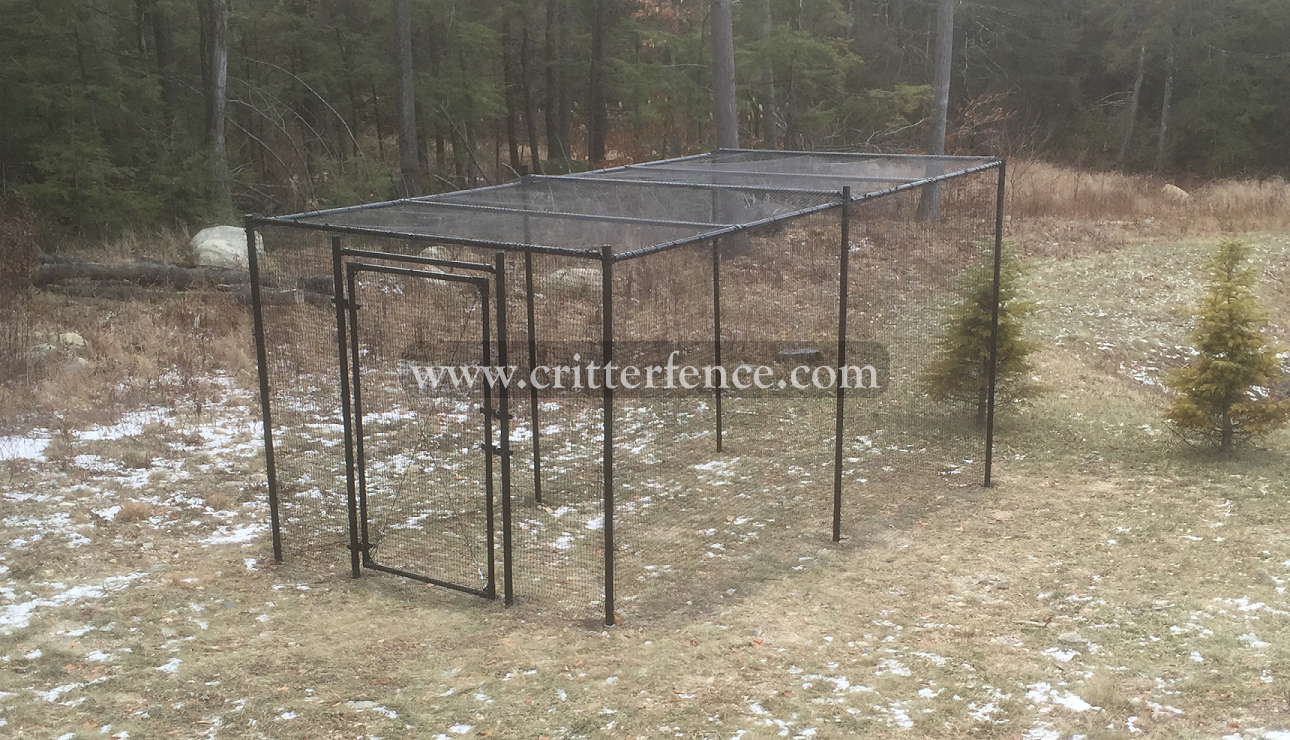
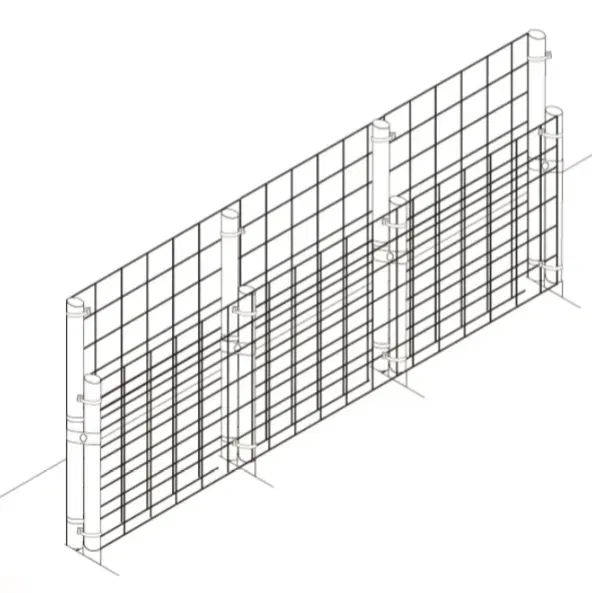
There are a few different options when choosing a material for use in your groundhog fencing installation. The most common are:
Poly Mesh: Polypropylene mesh is not suitable for the lower portion of a woodchuck-proof fence, as it is not chew-proof. It is a good option for the upper portion of fencing, however, because it is lightweight and nearly invisible against your landscape.
Welded Steel: Black PVC-coated 1x1-inch welded wire is the ideal woodchuck fencing material because it’s durable and chew-resistant. It’s also highly weather- and rust-resistant, and maintains its shape over time. The most common mesh sizes include:
1x1-inch black welded wire
¼ x ¼-inch for fences that also need to exclude smaller pests
2x2-inch black welded wire is suitable where groundhog pressure is lower
Combination Approach: The most effective form of groundhog-proof fencing is the combination of a tall poly upper section for visibility and to keep deer out, along with a welded steel lower portion installed roughly 36-48 inches off the ground and with 6-12 inches of overlap. This system handles not only groundhogs, but also deer, rabbits, and most other garden pests.