Shop Critterfence hardware cloth rolls
Critterfence offers professional-grade hardware cloth for gardens, chicken coops, raised beds, animal enclosures and small-animal protection. Choose black PVC-coated galvanized welded wire with 1/2-inch or 1/4-inch square mesh.
Select products feature hot-dip galvanization after welding and construction suitable for direct ground contact. Check each roll’s specifications for gauge, finish, dimensions and installation suitability.
Shop specific rolls below or compare the two mesh openings to find the right product for your project. Critterfence has specialized in animal fencing since 1992.
Shop actual rolls
Shop Hardware Cloth Rolls
Compare six roll examples. Product pages show current pricing and stock, including any clearance terms.
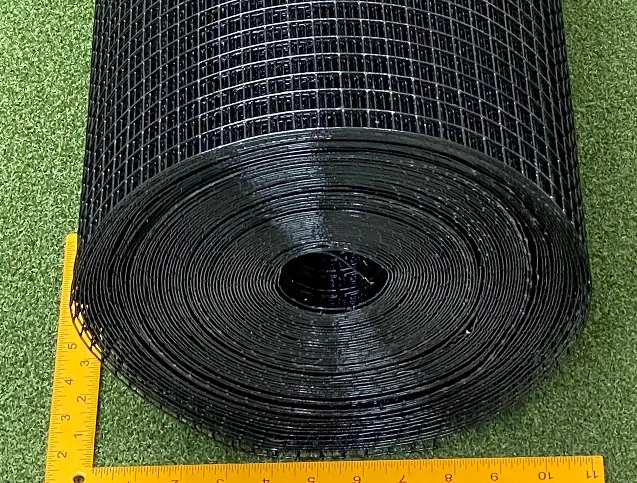

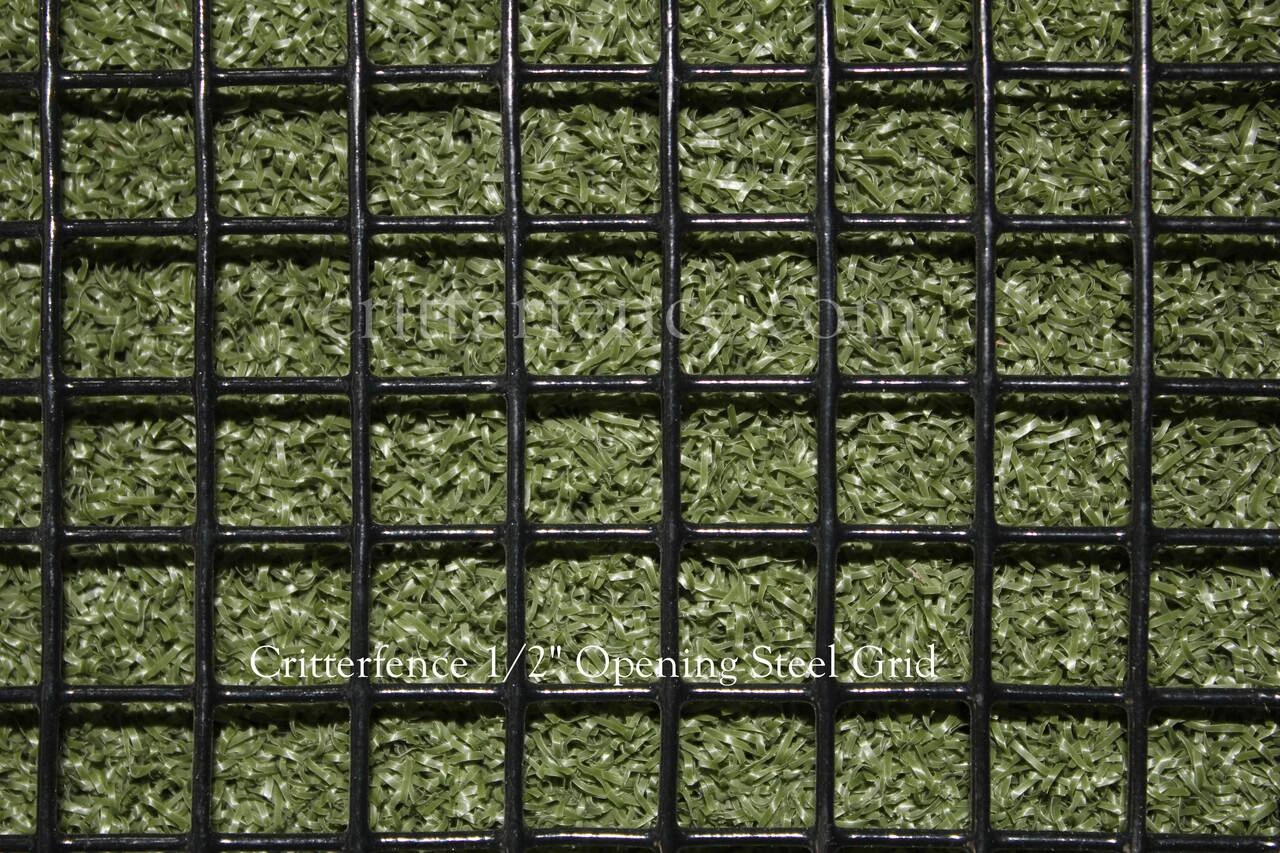


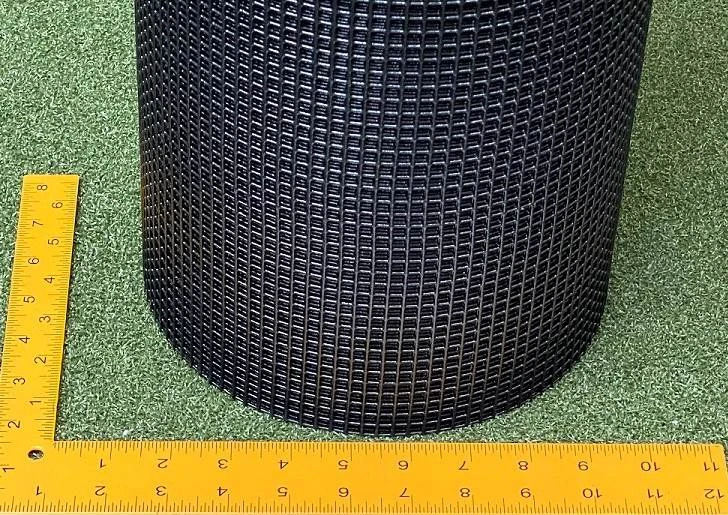
Shop hardware cloth
Choose your mesh opening
Start with the opening size. Each product page lists available roll heights, lengths and construction details.
Hardware cloth basics
What is hardware cloth?
Despite its name, hardware cloth is not fabric. It is metal mesh made by welding intersecting wires into small, regular openings. It is useful where conventional wire fence or chicken wire has openings that are too large for the job.
When comparing rolls, consider opening size, wire gauge, weld quality, galvanization, coating and installation conditions.
Sizing guide
What size hardware cloth do I need?
Choose the opening for the smallest animal or gap involved. Smaller openings add material and can reduce visibility and airflow.
| Mesh opening | Typical applications | Explore |
|---|---|---|
| 1/4 inch | Very small openings, garden screening and applications where 1/2-inch mesh is too large. | 1/4-inch mesh |
| 1/2 inch | Gardens, chicken enclosures, raised beds and general small-animal barriers. | 1/2-inch mesh |
| 1 inch | General garden fencing and larger-animal barriers. | 1-inch welded wire |
| 2 inches and larger | Larger animals and projects that prioritize visibility. | Larger welded wire |
An opening alone does not guarantee animal exclusion. Species, age, seams, gates and installation details all matter.
Product specifications
Compare Critterfence Hardware Cloth
These specifications describe the linked black welded-wire categories and the selected roll examples. Confirm details on the individual product page before ordering.
| Feature | 1/2-inch hardware cloth | 1/4-inch hardware cloth |
|---|---|---|
| Mesh opening | 1/2 × 1/2 in | 1/4 × 1/4 in |
| Construction | Welded steel wire | Welded steel wire |
| Finish | Black PVC coating over galvanized steel | Black PVC coating over galvanized steel |
| Wire gauge listed for these categories | 20.5 ga minimum before coating; 17 ga after coating | 21 ga minimum before coating; 17 ga after coating |
| Roll examples linked above | 5 × 100, 6 × 100, 7.5 × 50 ft | 4 × 50, 5 × 50, 6 × 50 ft |
| Common applications | Gardens, coops and fence-bottom barriers | More restrictive small-animal barriers and screening |
1/2 inch and 1/4 inch
Compare the two small mesh options
Half-inch mesh is a practical choice for many gardens, raised beds, chicken coops and fence-bottom barriers. Quarter-inch mesh offers a more restrictive opening where the animal or gap calls for it.
Material comparison
Galvanized and black PVC-coated hardware cloth
Galvanization helps protect steel from corrosion. Galvanizing after welding can cover the welded intersections as well as the wire. Black PVC-coated options add a dark outer finish that blends into landscaping.
Check the individual roll for wire gauge, coating, soil-contact suitability and any service-life rating. Construction varies by product.
Buying questions
Choosing Hardware Cloth for Outdoor Projects
Hardware Cloth vs. Chicken Wire
Hardware cloth has welded square openings. Traditional chicken wire has twisted hexagonal openings. For predator-resistant sections of a coop, compare the opening size, wire strength, framing and fasteners—not just the material name.
What Gauge Hardware Cloth Is Best?
Gauge describes wire thickness; a lower gauge number generally means thicker wire. The current 1/2-inch and 1/4-inch black welded-wire categories both list 17 gauge after coating, with different minimum gauges for the steel before coating. Compare the full construction of each roll.
How Long Does It Last Outdoors?
Service life depends on galvanization, coating, moisture, soil contact and installation. Check the specific product rating rather than assuming every roll has the same lifespan.
Can It Be Buried?
Use only a roll rated for soil contact, fasten the barrier securely, and inspect seams and edges. The linked black welded-wire categories describe soil-contact suitability; confirm the individual SKU before installation.
Applications
Where hardware cloth works best
Use small mesh where larger fence openings would leave a vulnerable gap.
Gardens and raised beds

Protect plants or line a raised bed where burrowing animals are a concern. Close edges and seams carefully.
Chicken coops and runs

Small welded openings can provide a more restrictive barrier in vulnerable parts of an enclosure.
Rabbits and small animals

Mesh size and a securely fastened bottom edge work together.
Fence-bottom reinforcement

Combine small mesh near the ground with a taller, more open fence above.
Rodents and snakes

Choose the opening for the specific species and inspect the barrier for gaps.
Installation
How to install hardware cloth
- Measure the area, corners, seams, gates and ground-level gaps.
- Select the opening size and roll dimensions.
- Cut with suitable tools; wear gloves and eye protection.
- Fasten securely to posts, framing or existing fencing.
- Overlap adjoining sections and protect the bottom edge where digging is possible.
- Inspect the finished barrier and cover sharp cut ends.
Why Critterfence
Why Choose Critterfence Hardware Cloth?
Critterfence has specialized in animal fencing since 1992. Its 1/2-inch and 1/4-inch black welded-wire categories offer small mesh openings, hot-dip galvanization after welding and black PVC coating. Select the opening and roll size for the animal and site, then confirm each product’s gauge and ground-contact specifications before ordering.
Questions and answers
Hardware Cloth FAQs
What is hardware cloth used for?
Gardens, raised beds, chicken enclosures, screening and reinforcing the lower portion of larger fences.
How is it different from chicken wire?
Hardware cloth is a small-opening welded mesh. Traditional chicken wire generally has twisted hexagonal openings.
Is 1/2-inch or 1/4-inch better?
Choose 1/4-inch when a smaller opening is needed; choose 1/2-inch when it meets the application and you want greater visibility and airflow.
Can it be buried or touch the ground?
Only if the specific roll is suitable for soil contact. Review its product specifications.
Does hardware cloth rust?
Steel can corrode. Galvanization and PVC coating improve corrosion resistance, while actual service life depends on the product and environment.
Can it keep mice or snakes out?
Small mesh can be part of a barrier, but the opening depends on species and size. Close seams, doors and ground-level gaps.