Welded wire fence is a metal mesh made from steel wires welded at their intersections to form square or rectangular openings. It is used for garden protection, pet enclosures, deer barriers and other outdoor projects, with suitability depending on mesh size, wire thickness, finish, height and installation.
Critterfence offers black PVC-coated galvanized steel, uncoated galvanized options, stainless steel and graduated-opening welded mesh. Use this guide to compare the choices, then explore matching rolls and accessories in the existing catalog.

What Is Welded Wire Fence?
Welded wire fence is manufactured by joining intersecting horizontal and vertical wires to create a grid. Unlike hexagonal wire netting or woven and knotted fencing, its intersections are welded. The resulting mesh maintains a regular opening pattern and a clean appearance.
It is commonly supplied in rolls and attached to posts with suitable fasteners, bracing and gates. The mesh is one part of the fence system: the posts, connections, bottom treatment and overall layout also affect performance. Compare the wider range of wire fence types if you are still deciding between welded, woven or other mesh.
Choose Welded Wire Fencing by Mesh Size
The opening size helps determine what can pass through the mesh. Smaller openings can help address smaller animals; larger openings may suit larger-animal barriers and preserve visibility. Mesh size alone does not address climbing or digging.
| Mesh / style | Typical use | Important limitation |
|---|---|---|
| 1/4 x 1/4 or 1/2 x 1/2 in | Small-animal barriers and selected poultry or garden projects | Select strength and installation details for the specific animal. Compare hardware cloth |
| 1 x 1 in | Garden protection, smaller-animal barriers and lower-fence reinforcement | Not automatically rodent-proof; assess species and digging. Shop 1x1 welded wire |
| 2 x 2 in | General-purpose yard, garden and medium/large-animal fencing | Smaller animals may pass through. Shop 2x2 welded wire |
| 2 x 4 in | Deer barriers, larger-animal enclosures and property fencing | Not suitable alone for rabbits or small animals. Shop 2x4 welded wire |
| Graduated welded mesh | Mixed-animal projects with smaller openings near the ground | Check the exact opening pattern and height. Compare wire fence styles |
Choose Your Welded Wire
Explore these mesh and finish categories. Dimensions and gauges below describe a specific example roll, not every option in its category. Check the selected product’s specifications, current price and availability before ordering.
1 x 1 Black Welded Wire
- Finish
- Black PVC over galvanized steel
- Gauge of example
- 19GA steel before PVC; 17GA after coating, per example listing
- Example roll
- 7.5 ft x 100 ft

2 x 2 Black Welded Wire
- Finish
- Black PVC-coated galvanized steel
- Gauge of example
- 15GA steel, per example product listing
- Example roll
- 8 ft x 100 ft

2 x 4 Black Welded Wire
- Finish
- Black PVC-coated galvanized steel
- Gauge of example
- 15.5GA steel before PVC; 13.5GA after coating, per example listing
- Example roll
- 8 ft x 100 ft

1 x 1 Galvanized Welded Wire
- Finish
- Silver galvanized steel; no PVC
- Gauge of example
- 16GA wire before coating, per example listing
- Example roll
- 7.5 ft x 50 ft
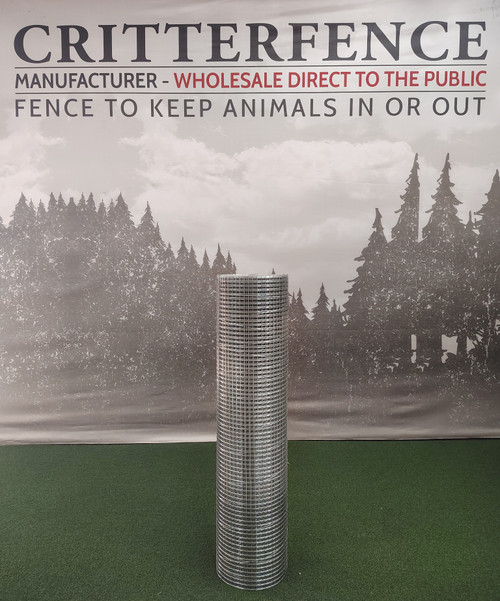
1/2 x 1/2 Stainless Steel Mesh
- Finish
- 316L stainless steel
- Gauge of example
- 16GA, per example listing
- Example roll
- 3 ft x 50 ft
Galvanized vs. Black PVC-Coated vs. Stainless Steel
Galvanized welded wire has a zinc-based protective layer that helps resist corrosion. Black PVC-coated galvanized wire adds a dark exterior finish that can blend into landscaping and offers an additional protective layer when intact. Stainless steel welded wire is another choice for demanding moisture or corrosion conditions; the grade and product specification matter.
Coating method, wire diameter, weld quality and exposure affect performance. Do not assume every galvanized or coated roll uses the same construction. Confirm the materials and coating details of the selected product, particularly for soil contact or demanding exposure.
How Wire Gauge Affects Fence Strength
For common steel wire gauges, a lower number generally means thicker wire. When comparing PVC-coated fencing, distinguish the steel-core gauge before PVC from the finished gauge after coating. The coating changes the finished diameter; it does not make the steel core thicker.
Wire gauge is only one part of the comparison. Mesh geometry, post spacing, bracing, fasteners and the forces expected at the site all affect the complete system. Check the exact SKU rather than applying one category-level gauge to every roll.
Common Uses for Welded Wire Fence
Garden Protection
Choose suitable mesh and height for the animals around vegetables, flowers and landscaping. Small lower openings may help with rabbit access; digging may require ground protection.
Explore garden fence systems ›Deer Barriers
Select height and configuration for terrain, deer pressure and the size of the protected area. A short welded wire fence is not automatically deer-proof.
Explore deer fencing ›Dog Fences and Pet Enclosures
Match strength, height and openings to the animal. Check gates and base gaps, and account for chewing, climbing and digging.
Explore dog fence options ›Poultry and Small Animals
Choose openings for the species and local predators. Evaluate overhead coverage, hardware cloth and secure bottom barriers for vulnerable enclosures.
Compare small-mesh hardware cloth ›How to Install Welded Wire Fencing
- Measure the line, identify slopes, gates and corners, and check local requirements and buried utilities before ground work.
- Choose mesh, height and a post system suited to the project.
- Install posts and properly brace corners, ends and gates according to the system instructions.
- Unroll the mesh carefully and attach it with fasteners approved for the selected posts.
- Maintain appropriate alignment and tension without overstressing the welds.
- Address bottom gaps with a suitable apron or buried barrier where appropriate for the product and site.
- Inspect gates, fasteners, cut edges and joins before use, and check the perimeter regularly.
Follow the manufacturer’s instructions for the specific fence system. Read installation guides and watch fence videos.
How Much Welded Wire Fence Do I Need?
Measure the full perimeter in feet and subtract only confirmed openings that will not need mesh. Divide the remaining fence length by the usable length of each roll, then round up to whole rolls. Account for joints, cuts, terrain and waste. Calculate posts, braces, gates and fasteners separately.
Three rolls provide 300 ft before allowances. Check the usable length, joints and waste required by your actual layout before ordering.
Welded Wire Fence FAQs
Is welded wire fence good for gardens?
Yes. It is commonly used for garden protection. Choose openings, height and ground treatment for the animals you need to exclude.
What is the difference between welded and woven wire fence?
Welded wire has welded intersections; woven or knotted wire uses other joining methods. Flexibility, opening stability and suitability depend on the product.
Is welded wire fencing suitable for deer?
It can be when the overall height and design suit local deer pressure. Larger openings may suit deer barriers but will not exclude small animals.
What gauge welded wire fence should I buy?
Choose for animal pressure, expected impact, mesh and the support system. Compare the steel-core gauge across coated products and check the selected SKU.
Will welded wire fence rust?
Steel can corrode when protective coatings are damaged or degraded. Galvanization, PVC coatings and stainless steel offer different corrosion resistance; exposure and maintenance matter.
Can welded wire fence be buried?
Some products are suitable for soil contact. Check the selected product specifications and local conditions before burying mesh.
What is the best mesh size for rabbits?
Choose openings small enough to prevent passage, especially near ground level. Consider the species and age of animals, and an appropriate apron or buried barrier where digging is a concern.
How long does welded wire fencing last?
Service life depends on steel, coating, installation and environment. Use a verified rating for the specific product rather than a universal lifespan claim.
Rolls, Parts and Installation Resources
Shop welded wire fence rolls by mesh and finish, and view current sizes, specifications and pricing.
Get Help Choosing Welded Wire Fencing
Tell our product experts about your perimeter, target animals, terrain and exposure conditions. We can help compare mesh, materials and components for your project.