Google Ads
Skip to main content
#1 Animal Fencing - #1 Animal Fence System
Shop seasonal inventory savings here: CLEARANCE - Now
through Tuesday 5/19
Instant shipping upgrade no charge: As of today, all orders ship within one business day Free shipping over $99 – Save up to 15% on fence kits – Save up to 15% or more on fence rolls

Custom Not Visible

Protect your property with professional-grade patented deer fence solutions designed to keep deer out without sacrificing the look of your landscape. At Critterfence© we specialize in durable, effective deer fencing for gardens, orchards, landscaping, farms, vineyards, and residential and commercial properties of all sizes.

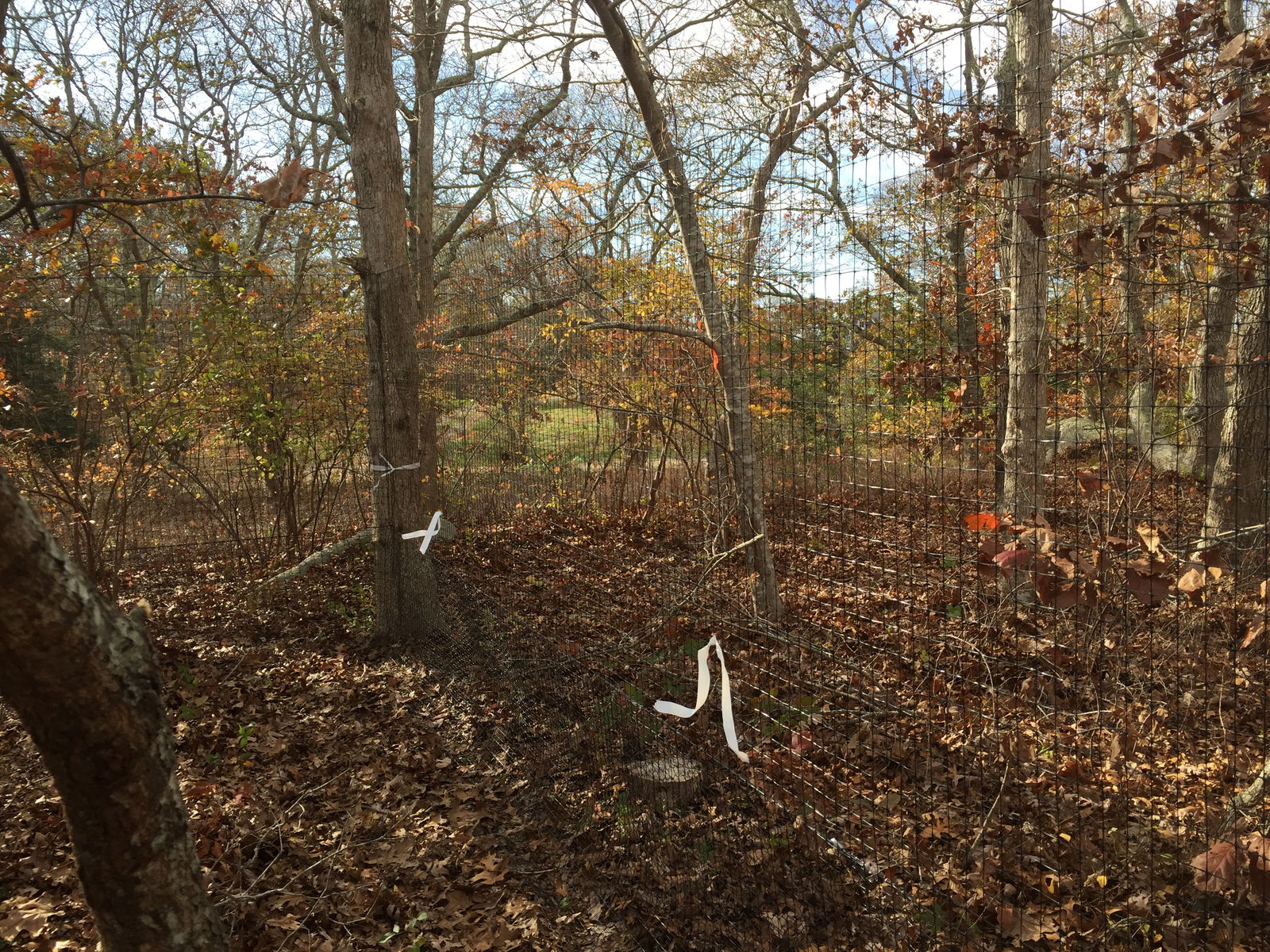
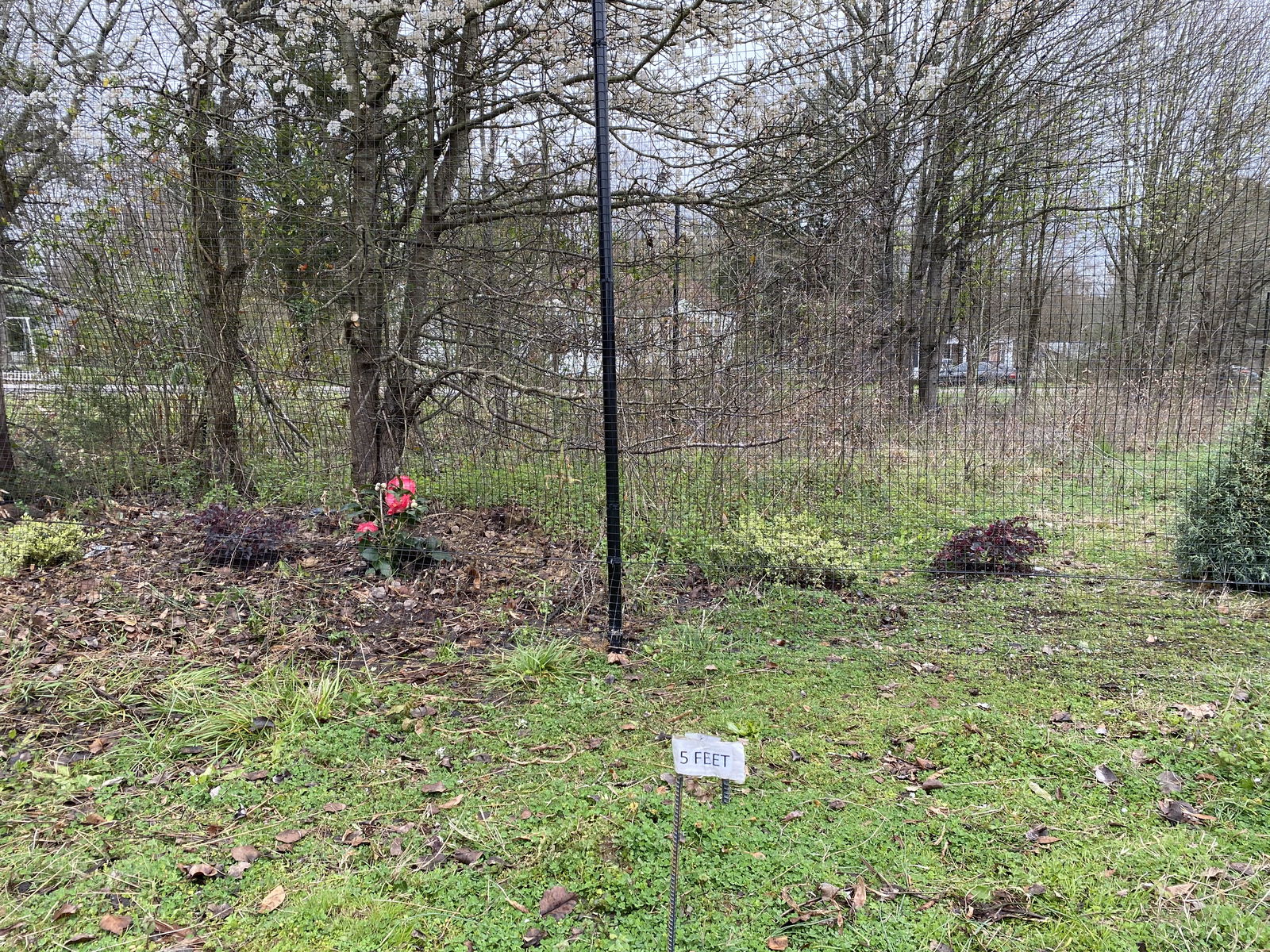
Our nearly invisible black deer fence blends naturally into the environment, preserving views while creating a highly effective barrier that helps prevent costly damage to plants, trees, shrubs, and crops. From small backyard installations to large agricultural projects, we offer deer proof fencing solutions that are easy to install, scalable, and built for professional performance.

Every deer fencing system is designed with strength, reliability, durability and appearance in mind. We provide complete systems with fencing, posts, gates, accessories, and expert guidance to ensure your project succeeds from start to finish — since 1992.

This is our deer fence starting page – for deer fence information and parts, please scroll down below

Shop Our Ten Most Popular Deer Fences

Shop All Deer Fence Kits

In progress (no built-in subcategory explorer in Zora)

Get Experienced Advice and a Personal, Custom Quote

Don’t need a complete fence? Shop deer fence supplies here:

DEER FENCE BASICS

What Is the Best Deer Fence?

The best deer fence is strong enough to stop deer reliably without injuring them or allowing them to become entangled. A poly or metal fence with a 2-inch or smaller mesh opening is the standard recommendation. Beyond mesh size, the best deer fence depends on three key variables:

  • Height: At least 7½ feet for most residential and agricultural applications. See the next section for full height guidance by application.
  • Strength: A minimum of 650 lbs breaking strength per square foot for areas up to 350 linear feet; 950 lbs or more for larger perimeters. Deer occasionally run into fences at full speed, so strength matters.
  • Bottom security: Deer can slide under unsecured fences. The best setups include either a 6” ground overlap staked down, or a separate chew-barrier layer at the base to prevent deer (and small animals) from pushing underneath.

For most applications the most popular choice is a poly deer fence paired with a small-opening steel chew barrier at the base — it keeps out deer, rabbits, and groundhogs in one system. Poly’s natural flexibility means it won’t retain dents or deformation the way metal can, which is an added advantage for high-traffic areas.

SIZING GUIDE

How Tall Should a Deer Fence Be?

A deer fence needs to be 6 to 10 feet tall. The right height depends on perimeter length and deer pressure in your area:

  • 6 feet for small enclosed areas (e.g., a 25’×25’ garden) that deer can walk around. Deer are less likely to jump into a tight closed space, and 6’ is also sufficient to protect individual shrubs and trees like arborvitae.
  • 7½ feet for most backyards and perimeter fences up to 500 linear feet — the standard recommendation for residential properties.
  • 8 feet for large areas, established deer paths, or areas protecting high-value food sources like orchards and vegetable crops.
  • 10 feet for deer containment (customers raising deer).

Keep in mind: if your fence is highly visible, deer can judge its height and may attempt to jump it. A low-visibility black fence reduces the likelihood of deer trying to clear it. In general, the smaller the enclosed area, the shorter the fence can be — deer are far less likely to jump into a confined 25’×25’ space than over a 300-foot perimeter fence.

MATERIAL COMPARISON

Compare Poly vs Metal Deer Fence Types

There are 1000+ fence kits, combinations and options within each type of deer fence. They can be constructed using all metal deer fence, a combination of metal and poly deer fencing, or all poly deer fencing.


Poly deer fence is strong and lightweight but does not offer protection against small chewing animals like rabbits — it’s best paired with a smaller opening size metal chew barrier base if those smaller animals are a concern.

Polypropylene Deer Fencing

    • Mesh Sizes: Available in small (¾”–1”) to larger (1¾”–2”) openings for varied applications.
    • UV-Resistant and Long-Lasting: Black carbon composition actively resists UV degradation — lifespan of 3 to 25 years depending on mesh type.
    • Non-Rusting: Resists rust even in saltwater environments, making it ideal for coastal areas.
    • Flexible by Design: Unlike metal, poly fence has no memory; if hit, it returns to its original shape. Breaking strength ranges from 400 to 1,400 lbs per sq ft.

    PVC-Coated Steel Deer Fencing

        • Durable Construction: Galvanized steel coated in black PVC provides a strong, long-lasting barrier in high deer pressure areas.
        • Rust Resistance: PVC coating protects against weathering in harsh environments. Galvanized-after-welding finish covers joints for maximum rust prevention.
        • Opening Sizes: 1”×1” for chew/rodent barrier use; 2”×4” for general perimeter fencing.
        • Strength & Longevity: Breaking strength from 800 lbs (woven wire) to 2,000+ lbs (heavy-duty welded). Lifespan of 5 to 25 years.

        Our most popular deer fencing options include fence with overlap (staked outward as a dig deterrent), a poly fence with chew barrier base (for rabbit and groundhog exclusion), and 7½ foot height for the majority of residential and agricultural installations.

        COMMON APPLICATIONS

        Deer Fence for Gardens

        Garden deer fencing is one of the most common applications we support, from small raised-bed vegetable gardens to large ornamental landscapes and orchards. The right setup depends on the size of the area you’re protecting and what animals are a concern:

        • Surrounding individual shrubs or trees (like arborvitae): A 6-foot fence works well here, since deer won’t jump into a small enclosed space.
        • Backyard garden perimeters: Start at a house corner, wrap the garden area, and return. 7½ feet is standard for these enclosures, including a gate for access.
        • Creating a full backyard area: Starting at the house, going into the backyard, then back to the house again — a complete perimeter with driveway gates or deer grates (metal or concrete slatted fixtures deer won’t step over, similar to cattle grates).
        • Property-line perimeters: Surround an entire property including a wide driveway gate or deer grate for a fully exclusion-grade solution.

        A complete deer fence kit includes fencing, posts, gates, and all necessary hardware to build a working enclosure from scratch. Kits with a ground overlap or rodent barrier base provide complete multi-animal protection against deer, rabbits, and groundhogs.

        INSTALLATION GUIDE

        How to Install Deer Fence

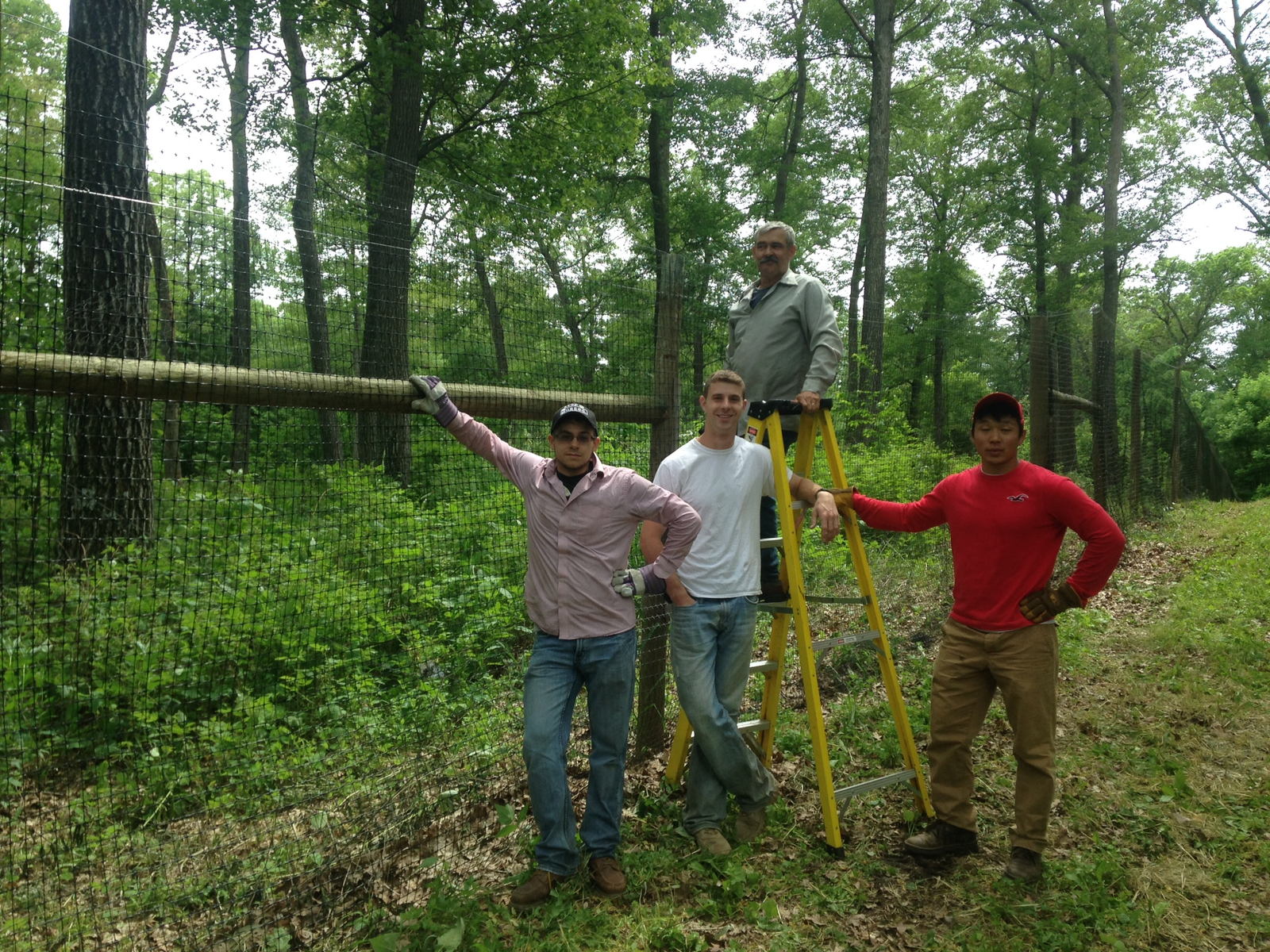
        Deer fences are made of support posts, rolls of fencing material, and hardware. Our installation system is designed for DIY builders and can cover large areas quickly — often without a contractor. The basic steps:

        1. Drive ground sleeves into the soil at post locations using a sledge hammer. Ground sleeves remain in the ground permanently and can accept removable or permanent posts.
        2. Insert posts into the ground sleeves and secure with locking set screws. Posts can be removed seasonally for storage; just leave the sleeves in place.
        3. Attach fencing to the posts directly with fence ties, or to a tension cable strung between posts for additional support on long runs.
        4. Secure the bottom by either burying the fence base or overlapping it outward and pinning it flat to the ground with stakes — this prevents deer from pushing up under the fence. Use kinked-wire fence stakes in standard soil, or long smooth-shaft stakes for loose sandy soil.

        Fences with tensioning cables are not designed to be removable. It’s easier to remove a fence without overlap than one with overlap.


        Important: Deer can and do crawl under unsecured fence bottoms — they use their noses to pry up the base or simply lie down and slide under. Always secure the bottom.

        Choose Critterfence deer fencing for dependable, long-lasting protection against deer and other wildlife. With customizable options, non-electric reliability, and easy installation, our deer fences provide a nearly invisible barrier that blends seamlessly with your landscape.


        Trust our decades of experience and innovative designs to keep your property safe. Explore our wide selection of fence kits and enjoy direct shipping from our warehouses for a hassle-free experience.

        Need Help?
        Critterfence Customer Support customerservice@critterfence.com